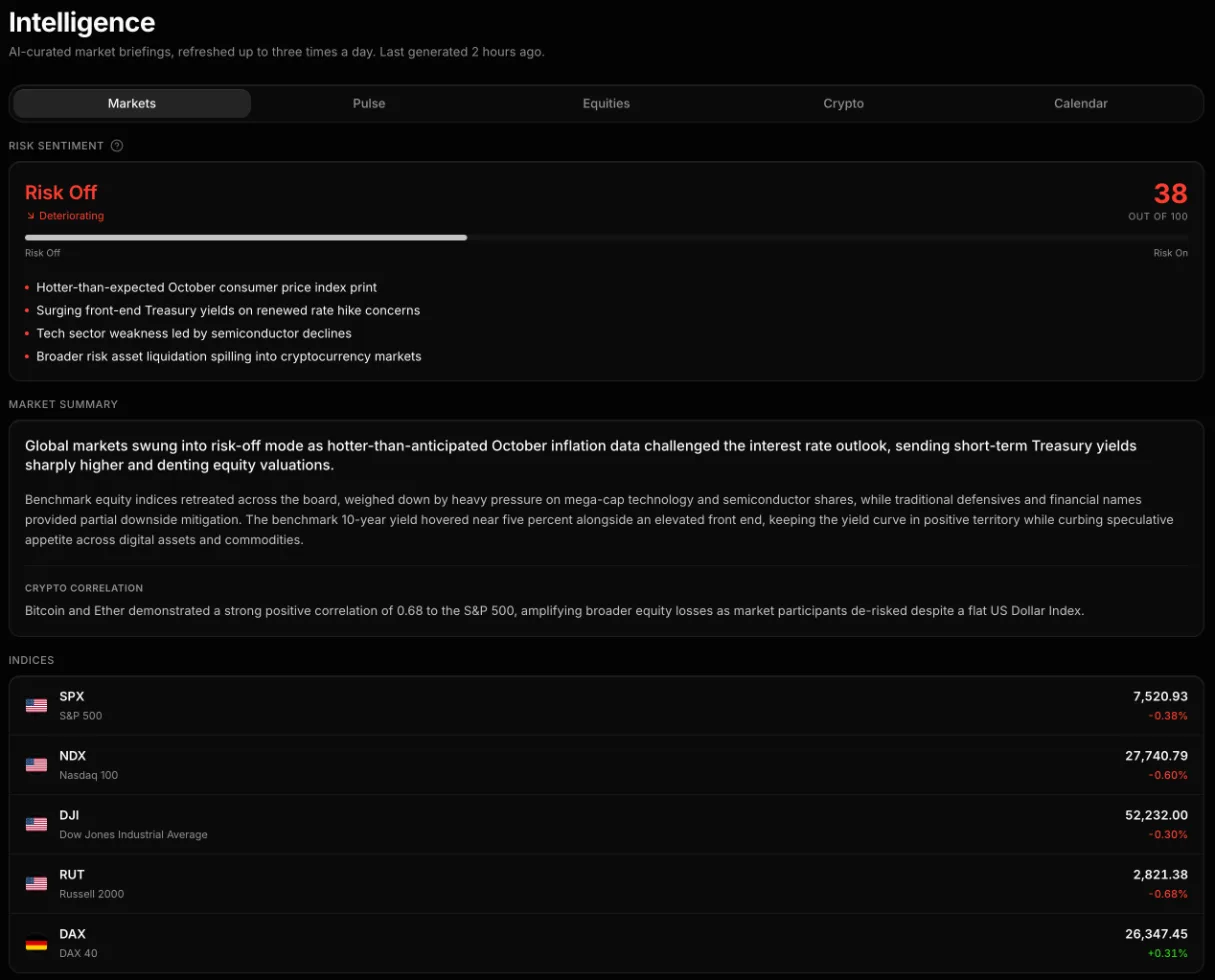
Macro data matters.
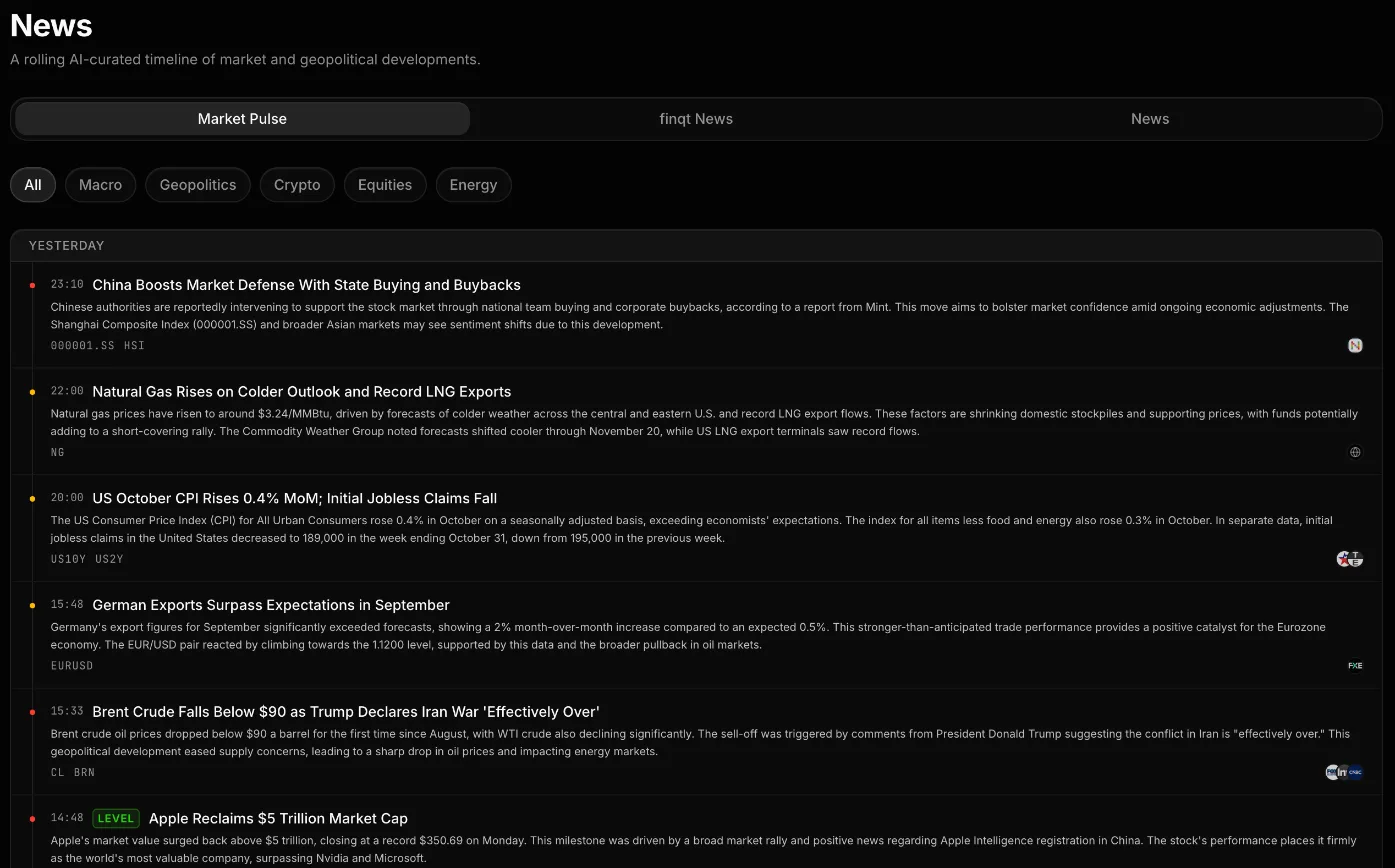 finqt Market Pulse: macro, commodity and equity developments with affected tickers and sources
It also gets people into trouble.
Every CPI print, jobs number, central bank meeting, growth revision, oil move, currency break, and rate repricing arrives with a wave of instant interpretation. Stocks jump. Crypto sells off. The dollar reverses. Someone declares a new regime before the first candle closes.
That is not macro analysis. That is reaction.
A calmer workflow starts with one idea: macro data matters most when it changes the path of liquidity, rates, earnings, or risk appetite. If it does not change one of those paths, it may move prices for a few hours without changing the thesis.
Separate event from regime
The first question after any macro release is not "is this bullish or bearish?"
The first question is:
"Is this an event, or does it change the regime?"
An event can create volatility without changing the broader backdrop. A hot inflation print can push yields higher for a day while the longer trend still points toward disinflation. A weak jobs number can spark a risk-on rally if the market reads it as rate-cut friendly. A central bank can sound hawkish while still leaving the expected policy path mostly intact.
A regime change is different. It changes the market's operating environment:
- Inflation is reaccelerating instead of cooling
- Rates are repricing across multiple maturities
- Credit spreads are widening
- The dollar is breaking a major range
- Earnings expectations are being revised down
- Liquidity is tightening or expanding faster than expected
Most releases are events. A few become regime signals. Treating every event as a regime change is how investors churn their own thinking.
Watch the second reaction
The first move after macro data is often mechanical.
Algorithms react to the number versus consensus. Rates jump or fall. Index futures move. Crypto reacts to liquidity expectations. Then humans, desks, and systematic funds start asking the better question: what does this mean for positioning?
That second reaction matters more.
For example:
- Stocks sell off on a hot CPI print, then recover because earnings strength still dominates.
- Yields fall on weak labor data, but growth-sensitive stocks keep dropping because the market is now worried about recession.
- Bitcoin spikes on a dovish central bank tone, then fades because the dollar refuses to weaken.
The first move tells you what surprised the market. The second move tells you what the market believes after digestion.
In finqt, this is where live charts, news, watchlists, and cross-market context belong on the same screen. Macro is rarely one asset. It is the connection between assets.
Build a four-box macro map
You do not need an economist's dashboard to follow macro well.
Start with four boxes:
- Rates. Are yields rising or falling, and where on the curve?
- Dollar. Is the dollar strengthening or weakening against major currencies?
- Growth. Is the data improving, slowing, or becoming mixed?
- Liquidity/risk. Are credit, crypto, high-beta equities, and volatility confirming the same story?
After a release, update only the boxes that actually changed.
This prevents one headline from hijacking the whole view. A strong jobs number might affect rates and growth, but if the dollar barely moves and high-beta assets hold firm, the market may not be treating it as a major risk event.
The map is not a prediction engine. It is a discipline for seeing which parts of the system agree.
Match macro to your actual exposure
Not every macro print matters equally to every investor.
A long-duration tech portfolio cares deeply about rates and discount rates. A bank-heavy portfolio may care more about yield curve shape and credit. A commodity portfolio may care more about the dollar, China demand, and energy inventories. Crypto often reacts to liquidity, rates, the dollar, and risk appetite, but the dominant driver changes by regime.
Before overreacting to a release, ask:
"Which part of my portfolio is actually exposed to this?"
If the answer is unclear, the release may be background noise for you.
This is where many investors make the mistake of importing someone else's urgency. A macro trader may need to react instantly. A long-term investor may only need to note whether the release changes the quarterly trend.
Same data. Different job.
Write the macro implication in one sentence
After the noise settles, write one sentence:
"This release matters because..."
Examples:
- "This release matters because it pushed rate-cut expectations further out and pressured long-duration growth."
- "This release matters because the dollar failed to rally on hawkish data, which suggests positioning may be stretched."
- "This release does not matter much for my current book because the assets I own are more exposed to earnings revisions than rates this week."
If you cannot finish the sentence, you probably do not have a macro view yet. You have a headline.
Macro should slow you down
The irony of macro data is that it often feels urgent, but the best use of it is to slow down.
A release can tell you that the environment is changing. It can also tell you that the market was already positioned for the surprise. The only way to know is to look across rates, dollar, growth, liquidity, and your actual exposure.
Reacting to the number is easy.
Understanding what the market does with the number is the work.